Showing posts with label Holy Grail. Show all posts

Friday

DARE TO BE GREAT


Joseph Campbell once said, (paraphrasing) The Grail Knights never entered the forest at the same point, but always found their own way in.  Because the moment you take the path already cut, you are on someone else's path, and you should already know that the Grail is not there.

He means YOUR Grail.  As an artist, your work, and your journey to create it, IS your search for the sacred.

I just just read a great post last night - for any author or artist - over on the blog of Kristine Kathryn Rusch (linked below).  

There's a great quote from Adam Levine of Maroon 5 in her piece that illustrates the possibilities of the new digital world for artists of all stripes.


Levine said, “ The diversity in people’s tastes now is so much cooler. Everyone is saying MP3s and the Internet have ruined the music business—and it’s sad there are no record stores—but music is just so present now in the culture. More than it’s ever been. That’s a result of the [technological] advancements we’ve made. I’m such a huge fan of where music is right now.”


Rusch also explores runs-ins with gatekeepers of various kinds, and  how the new reality of the digital world frees you to bypass them, if you’ve got the guts.


It reminded me of a column I wrote last year about the same thing, and what the new freedom for writers might mean for books.  From my earlier post…


None shall pass!


But the new development in publishing might just be the most radical of the big three.  A very short time ago, books were very expensive to print and very difficult to distribute.  The gatekeepers were firmly entrenched in a New York based business that had a strangle hold on the magic elixir (Distribution).

But then something happened.  Amazon’s experiment with electronic books, the “Kindle,” worked.  People liked it.  They told their friends and bought more.  Other companies with internet presences followed suit with their own ereaders.

And now, quite suddenly, books are not expensive to produce.  And distribution is readily available for an after market cut of the profits.  That is to say, there is no distribution cost to the manufacturer (the writer).

Imagine that you have been guarding the same bridge for one hundred years, then the water in the river suddenly drains and there is no need for your bridge.

“Oh my God,” some of you might say, “I LIVE on the other side of that bridge!  Doesn’t this mean that there will be a flood of crap writing from every wannabe poet and novelist who couldn’t get by the Gatekeepers?”

I’ve got two answers for that.

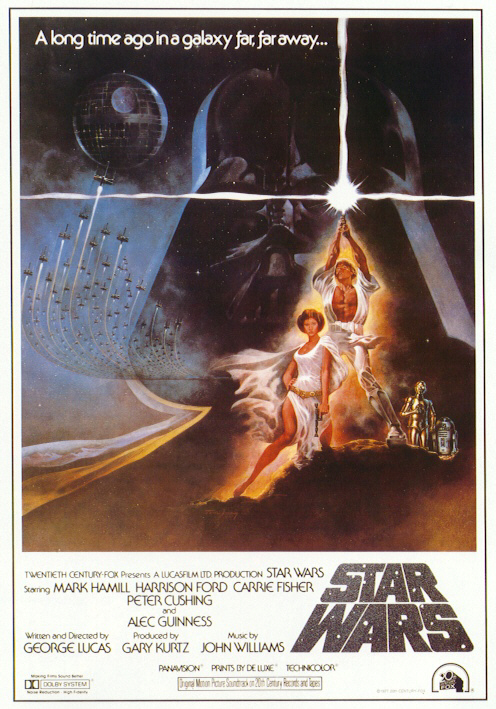
First, in 1977 there was a movie that was even better than Stars Wars.  But even Alan Ladd Jr. wasn’t interested.  So I never saw it.  You never saw it.  Nobody will ever see it because it doesn’t exist. (I'm obviously just joking to make a point here because, as everybody knows, there has never been a movie better than Star Wars).


And second, Yes. Yes, of course there will be tons of crap.  But unless there is something terribly wrong with you, you ought to be able to recognize and easily side step crap.

But keep your eyes open because there will be a lot of other things coming as well.

There will be beautifully written stories in which nobody but the teller had a say in how much or how little sex and violence “needed” to be in it or not in it.  Or in how long or short a book must be in order to save on printing costs.  Or in who lives and dies in the end.  Or in how many sentence fragments can be strung together with artistic license in order to make a point about artistic license... (see what I did there?).

There will be concepts that are so different from whatever was successful last year that they will shock and delight you.  Rules will be broken for worse or for better. And readers who are not gatekeepers will find that there are books out there written, it will seem, just for them.

And new things that work, new things that are good, new things that may surprise and delight, will be picked up by those for whom they were intended.  Word will spread to others who like the same things, and before you know it, somewhere within the millions of diverse minds, tastes, and interests that exist in cyberspace, audiences will come together.  Perhaps so small that they are barely a blip on the world wide web, but easily large enough for writers they enjoy, to write for.

Find the rest of my post here - GOT BOOKS?

Stumbling over Rusch’s post last night was uncanny because I was JUST having the same conversation over dinner with my wife.  We were discussing how my goal as a novelist  is to write “unexpected.”  How high-concept themes and stories don’t have to be delivered exactly as they’ve been seen before…

From Rusch’s article - But those things forced me into a series of ever smaller boxes, the idea that I should write only certain things, even though I wanted—and was capable of—writing several other kinds of things. To make matters worse, many of those boxes formed because other opportunities died because of someone else’s incompetence, or simple dumb luck. It wasn’t because I was best at the things I ended up doing; it was because those were the things that had had better breaks.

It all seemed random, and that made it even more frustrating...
And then there was the changing role of advisors.

Somewhere along the way the advisors felt they should control my career rather than allowing me to control it. All of this was before 2007, and since then things have only gotten worse.

Only instead of saying “Out! All of you!” to advisors like that, most writers embrace the criticism or the snide comments, and try to shove themselves into the tiny boxes, not realizing that they’re destroying the one thing that makes them unique.
Kristine Kathryn Rusch’s article is well worth the read.  And it’s right HERE…

Over dinner last night…

It was exactly like this...

...my wife and I spoke about how my belief that my voice will resonate has been the driving force.  And how I can’t wait to work every day, and get deeper and deeper out there in this new water.

The point is, the sudden ability to bypass gatekeepers was never a green light to produce trash.

It is an invitation to dare to be great.


Monday

Got Books?


I’m going to talk about books in a second.  But first, a little hard science and a desperately thin analogy.

“Homogenization is a generic term which refers to processing a solution so that it becomes uniform. It crops up in many industrial and scientific applications, although it is often used specifically to refer to milk, as part of a two stage process which prepares milk for sale. The first step, pasteurization, sterilizes the milk so that it is safer to drink. Homogenization stabilizes it for a smoother mouthfeel and flavor.”
“In order to accomplish homogenization, the milk is forced through a very fine screen at high pressure.”
                        -from the article “What is Homogenization?” at wisegeek.com

Sounds delicious, right?  With “smoother mouthfeel” and everything!
So, that’s a little about the homogenization of milk.  But there is so much more in our world that “becomes uniform” after it “gets forced through a very fine screen at high pressure.”

Books, for one.

Making a living as any kind of artist today is about reaching a lot of people with what you do.  (Yes, yes, “not necessarily, because I know a guy who bends old hub caps into coffee-tables and sells them online.”  Okay.  Agreed.  Always exceptions to my broad statements).

But in general, to make a comfortable living off your artistic pursuits you need a big audience.  And in order to reach that audience you need access.  And in order to gain access, you first must seek the approval of…

Gate Keepers.  This term means slightly different things depending on who you are talking to, and who you are talking about.  But in the most general way of looking at it, a Gatekeeper is pretty much anybody who works in any field with the words “The” and “Industry” surrounding a creative endeavor.  “The Music Industry.”  “The Film Industry,” “The Publishing Industry” “The Hub-Cap-Coffee-Table Industry…”

Gatekeepers have varying levels of responsibility, from the college intern at CAA who likes one in particular of the dozens of scripts a week he might read, to the studio head who has the final say on whether that intern's favorite script becomes a film.  No matter what your title may really be, as a Gatekeeper, your job is to find art that will work well as commerce and to open the gate for it and its creator to enter the magical world of Access.  All of these people are important, hardworking parts of the process, many of them are far smarter than me, and just to be clear, none of what I’m saying is meant to bash Gatekeepers.

That said, to the rock band who doesn’t understand why some of these people want them to put on neck-ties, or lose the neck-ties, or wear make-up, or stop wearing all that make-up, or change their sound completely before they can move on to the next step… Gatekeepers sometimes seem like the Black Knight in “Holy Grail.”  The dude who just doesn’t listen, doesn’t get it, and won’t get out of the way.


And that attitude is fine for your artistic integrity, but artistic integrity alone ain’t getting you through that gate.  Because the flip side of the Black Knight analogy is that the Gatekeepers are usually right.  That band may very well suck donkey.

The problem is, you and I will never know, because if they don’t get past the Black Knight, we’ll never see or hear them.  Although, that too has changed in the last few years, but my metaphor is already too strained to handle a digression now.   So...

What does this have to do with homogenization?

Like Goldilocks, the Gatekeeper’s job is to say “no,” until they see something that is “just right.”  And “just right” has a lot of variables that Gatekeepers - especially the ones near the top who get paid a lot for their opinions - must be very good at spotting and understanding.

Let’s look at movies from the GK perspective.  Will this potential movie make money?  Is it close enough to what made money last year so I won’t get fired for doing something stupid if it tanks?  Is it different enough to feel fresh and new?  Is it any good? (yes that’s important, but not necessarily number 1 on the list).

These are tough questions.  And when your job depends on the answers, they are pretty damn important too.

Now here’s the problem.  Well, maybe I should put “problem” in quotes because whether this is a bad thing or not is pretty subjective.  So… here’s the thing.  Gradually, as imaginative work after imaginative work gets “forced through a very fine screen at high pressure,” everything starts to become more or less the same.  And that’s pretty bland.  I’m not saying it’s “bad.”  But I am saying it’s more or less the same.

And sameness is a function of industry not of artistry.  Sameness is about not straying too far from what we know “worked” in the past, while maybe taking an incremental step in a new direction just to make sure we don’t stagnate.

Before 1977, nobody in Hollywood wanted to make “Star Wars” but Alan Ladd Jr.   By 1978, right after that unexpected and interesting decision struck gold, “Battlestar Galactica” was on TV every week, Shatner and Nimoy's phones were ringing off the hook again, and someone even thought “Tron” was a good idea.   Again, not bad things per se… the system worked in the end, “Star Wars” happened, I can never get enough Shatner, and by 2007 “Battlestar Galactica” got pretty good.

But if it wasn’t for that lone Gatekeeper who thought “Star Wars” was a good movie, there never would have been a “Tron - Legacy.”  And I’ll leave it to you to decide if that’s good or bad.  In my opinion, it’s just another gallon of milk, same as the one I bought last trip to the store.

So what does this have to do with books? 

In the big three of the entertainment industry, film&TV, music, and publishing, something really important is happening.  The most powerful among Gatekeepers, the ones whose giant companies control the magic elixir called “distribution” (remember that in order to make a living through your art you MUST reach huge audiences), are becoming less powerful.

Digitization of music has radically changed the music industry and opened the gate to anyone who thinks they can find their own audience (no easy task, mind you).

Digitization of film and less expensive cost of equipment has opened the door for indie film makers wider than it’s ever been.  Of course, big movies still cost big money and the gatekeepers there are naturally even more particular about what is “just right.”  But at the same time, spending 200 million on a film and another 200 million on marketing can make you feel pretty silly when you see a film like “Paranormal Activity,” which could have been shot on an iphone, was originally marketed for next to nothing on the internet and (after getting picked up for distribution by Paramount) has made 190 million dollars.
 
But the new development in publishing might just be the most radical of the big three.  A very short time ago, books were very expensive to print and very difficult to distribute.  The gatekeepers were firmly entrenched in a New York based business that had a strangle hold on the magic elixir (Distribution).

But then something happened.  Amazon’s experiment with electronic books, the “Kindle,” worked.  People liked it.  They told their friends and bought more.  Other companies with internet presences followed suit with their own ereaders.

And now, quite suddenly, books are not expensive to produce.  And distribution is readily available for an after market cut of the profits.  That is to say, there is no distribution cost to the manufacturer (the writer). 

Imagine that you have been guarding the same bridge for one hundred years, then the water in the river suddenly drains and there is no need for your bridge. 


“Oh my God,” some of you might say, “I LIVE on the other side of that bridge!  Doesn’t this mean that there will be a flood of crap writing from every wannabe poet and novelist who couldn’t get by the Gatekeepers?”

I’ve got two answers for that.

First, in 1977 there was a movie that was even better than Stars Wars.  But even Alan Ladd Jr. wasn’t interested.  So I never saw it.  You never saw it.  Nobody will ever see it because it doesn’t exist. (I'm obviously just joking to make a point here because, as everybody knows, there has never been a movie better than Star Wars).

And second, Yes. Yes, of course there will be tons of crap.  But unless there is something terribly wrong with you, you ought to be able to recognize and easily side step crap.
 
But keep your eyes open because there will be a lot of other things coming as well.

There will be beautifully written stories in which nobody but the teller had a say in how much or how little sex and violence “needed” to be in it or not in it.  Or in how long or short a book must be in order to save on printing costs.  Or in who lives and dies in the end.  Or in how many sentence fragments can be strung together with artistic license in order to make a point about artistic license… (see what I did there?)

There will be concepts that are so different from whatever was successful last year that they will shock and delight you.  Rules will be broken for worse or for better. And readers who are not gatekeepers will find that there are books out there written, it will seem, just for them.

And new things that work, new things that are good, new things that may surprise and delight, will be picked up by those for whom they were intended.  Word will spread to others who like the same things, and before you know it, somewhere within the millions of diverse minds, tastes, and interests that exist in cyberspace, audiences will come together.  Perhaps so small that they are barely a blip on the world wide web, but easily large enough for writers they enjoy, to write for.