HBO has many ways to prove its value. Every time I begin to think... "But I don't want to watch a dramedy about a man with a huge penis... why am I paying for this...?" something comes on that makes me really glad I subscribe. And that it's a tax write off.
The past two nights I stayed up late watching parts 1 and 2 of Martin Scorsese's 4-hour documentary on the life of George Harrison. You know... the third most interesting Beatle.
The documentary is called "George Harrison: Living in the Material World." I am too young to know anything about Beatlemania that I can't learn from documentaries, but you know what? The third most interesting Beatle is still plenty fascinating.
It's a very long story, filled with anecdotes both familiar and surprising. So I'm going to mention just three things I learned while watching it.
1. Great people are great for a reason. People don't just fall into lives like Harrison's. They bring something special to the table when they enter the world. The record of such a life is more like a vapor trail behind some brightly burning, wondrous thing.
Laird Hamilton doing his impression of Beatlemania
from George Harrison's POV.
The secret of living well has often been compared to surfing, learning to ride the waves as they come, etc... Much of the beauty of this film comes through watching the powerful but naive young Beatle ride such titanic waves as came his way, as have famously damaged or outright crushed Elvises and Michaels in the past, only to reach the beach, and smile.
The life-as-surfing analogy is about balance. Inner life balanced with outer. We know Harrison's outer life. Scorsese gives four hours of his best work to offer us a strong hint at an indescribable counter-weight, the inner-life that afforded George Harrison such remarkable balance.
Through the narrative of the film, you can literally see it on Harrison's face as the intelligent, talented, but arrogant young man grows into the visage of a master, a sage. It's a slow motion jaw dropper.
--->>>
Harrison - taunting me.
2. Even as a remarkably handsome bald man, I guess I really am jealous of hair like that. Harrison looked awesome even with 70's Jesus Hair and managed to not look like a complete tool in the 80's. A truly amazing feat as those of you who came of age in the 80's already know (and if you don't know, look at some old pictures of yourself - you looked like a tool).
And finally, the last thing I think I learned and the reason for this blog post.
Harrison was a spiritual seeker. The good kind; the kind that leads by the example of their life, that doesn't tell other people what they are doing wrong, but seeks to slake their own insatiable curiosity, driven by the same desires we all seem to have been given at birth, but guided by a degree of control that lets desire lead to accomplishment, and ultimately to wisdom. This is the wisdom to realize that no matter how great the accomplishment (or the failure), it's really not a big deal in the grand scheme we all seem to be a part of. It's the wisdom to know we can all just relax, because there is really only one thing to do here that is important, and it's not as hard as surfing giant waves or being a Beatle.
From the story of George Harrison's life as presented by Martin Scorsese, I think I learned this...
3. If you want to know God, learn to love other people. Even if it's just one. That person is God. This is why we have friends, why we marry, why we have children. And it's probably why we have enemies too. Everyone is a gift to help us learn. And we are all in a position to do it. So keep practicing.
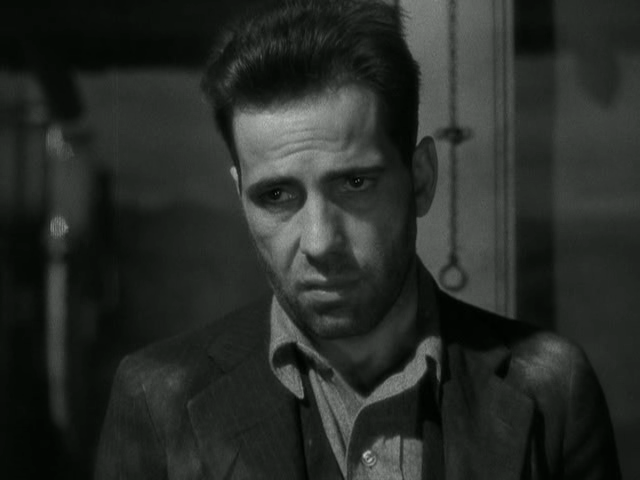
...you never really "got" what's so great about Humphrey Bogart.
"The Maltese Falcon" 1941
Director: John Huston
Starring: Humphrey Bogart, Mary Astor, Peter Lorre, Sydney Greenstreet, Elisha Cooke Jr.
Like everybody in the world, I love “Casablanca.” But to be honest, there was a time, even after seeing that film, that I just didn’t “get” Humphrey Bogart. What was the big deal? For a “tough guy” he seemed small and frail, with a weak neck that needed help from starched collars to support his oversized head. He smoked filterless cigarettes, which is not only gross but also seemed to explain why he never chased the bad guys, and why his fight scenes rarely involved more than throwing one punch.
Then I saw “The Maltese Falcon.” Now, every time I notice that it’s on TV, I stop whatever I’m doing and watch ‘til the end. Have to. Too good. Too many new things picked up with each viewing. Incredible movie. And I attribute most of that awesomeness to its star. Bogey has been one of my favorite actors ever since.
What is so great, then, about Bogart as the enigmatic private eye, Sam Spade? There are two elements to Bogey and his performance here that, to me, really makes this film something special. The first is something an actor either has or doesn’t. Brains. The intelligence to play a character who is smarter than everybody in the room.
Dashiell Hammett is a smart writer who creates smart plots for smart characters who speak smart dialogue. Sam Spade would never tell you this, but he’s a bit of a genius, a gumshoe-savant, and whoever is playing him needs to convince you of that unspoken fact with every gesture and every twitch, or it won’t work. It certainly wouldn’t be as good as this movie, anyway. Now it’s true that any actor can probably play the world’s smartest scientist simply by putting on a lab coat and teasing up his hair. But you’ve got to bring a lot more than a London Fog overcoat and Fedora to play Sam Spade the way Bogart does.
“The Maltese Falcon” is about a detective who suddenly finds himself at the very end of a chase that has been going on for centuries. Imagine that you are dropped into a game of some kind. All you know about the game is that everyone but you knows the rules and the object, it’s played to the death, and it’s almost over. This is basically the situation for Sam Spade. So he has to play catch up... really fast. He’ll live or die by his ability to stay half-a-step ahead of every other character, including the cops who suspect him of murder. His only weapons then are his razor sharp mind and his rock-steady ability to bluff. Add to that equation the film’s low budget, long dialogue scenes that essentially play like a stage play instead of a movie, and you’ll see that the star’s ability to portray this character will either make or break the whole thing. The sheer intelligence that beams off of Bogart in this movie is almost like a special effect. He convinces us with his eyes, his long pauses, a smile, and of course his interpretation of the paragraph-sized chunks of dialogue, that Sam Spade is solving at least four different puzzles in his head while everything else is happening around him. This was not the first filmed version of “The Maltese Falcon.” It’s Bogart that separates this film not only from previous adaptations, but from every other film. He’s what makes it one of the best movies ever.
As the Villain in "The Petrified Forest" (1936)
Second, there is an undeniable “bad guy” quality to Humphrey Bogart that made him the ideal choice (even though producer Hal Wallis originally tried but failed to get George Raft) to play the morally ambiguous Sam Spade. Bogart had made a career out playing villains and heavies up until this point. So any nobility of character that Spade may eventually succumb to, never feels like a given. “One never knows what you’ll do, or why,” says the Fatman (Sydney Greenstreet).
Within hours of his partner Miles Archer’s death, Spade had their secretary, Effie, remove Archer’s name from the door. Which is a little awkward because the police suspect that Spade murdered Miles so he could continue an affair with his wife. Which, of course, isn’t true because, although he IS sleeping with Mrs. Archer, Spade can’t stand her. He uses Effie, who he’s also apparently sleeping with*, to run interference for him. And yet... somehow he is the good guy.
That constant undercurrent that he is capable of anything is also what really stirs the drink in “Casablanca.” Both films even end in a similar way, where the decision Bogey must make - to be noble or selfish, good guy or bad, has us on the edge of our seats. That doesn’t work if the actor can’t make us wonder what he’s capable of, or what his idea of a happy ending might even be. The dialogue at the end of Casablanca, “the troubles of two people...” is some of the most famous in movie history. But Sam Spade’s speech to Brigid O’Shaughnessy at the end of “The Maltese Falcon,” taken directly from the pages of Hammett’s book, is some of the all time best.
Humphrey Bogart delivered in both cases.
Apparently there was sex in 1940's, just not in the movies.
That's what sub-text is for. And paperback book covers.
*A fun note on sex in “The Maltese Falcon.” According to the movies in 1941, people did not have sex. So there is a code to this film. Anytime Bogie calls a woman, “Darling,” it means they’ve had sex at some point. The scene where Effie sensually rolls him a cigarette makes their relationship pretty clear, but when he calls her Darling... you can be sure. You’ll see the secret code most clearly after the scene where it seems like he and Mary Astor are about to... we fade out, and when we come back, suddenly they are both “Darling.”
New post - Read how The Maltese Falcon influenced my contemporary fantasy, King’s X. Click HERE
The anecdote on the big yellow stationary also appears in the first pages of Ray Bradbury's "Zen in the Art of Writing." I recommend that book to anybody who wants to be a writer.
But I recommend this simple advice to anyone who wants to be happy in their work, and really in their life. It would be awesome if we could all figure this out at age 9, but we can also jump in at any time.
The typos - "Who die(d)?"- are particularly cool because they are legitimate typos... as in made on a typewriter. Because even in 1991, Ray Bradbury, the master of science fiction, did not use a computer. Why not? Because he's Ray Bradbury! If you draw your own awesome stationary with a ballpoint pen like that then you can do whatever you want too.
recommended for: Sci-fi fans interested in nostalgia.
status: read count: 1
(above) - Tarzan killing yet another of the many, many lions he kills in this book - prompting this reader to ask: "Are there NO OTHER DANGERS in the jungle? Can you at least have Tarzan kill something else? How about a giant snake?"
"Tarzan of the Apes" - By Edgar Rice Burroughs
Since its original publication in 1912, Tarzan remained a cultural phenomenon and iconic hero for the duration of the 20th century.
When I was a kid in the late 70's, I remember watching all the old b/w movies with Johnny Weissmuller on the UHF stations every Sunday morning on "Tarzan Theater." But somehow, I never read this book. So when I saw it for free on "Stanza," I picked it up.
Like a lot of what comes out when writers get paid by the word, "Tarzan of the Apes" is strange mix good writing and bad, of terrific concepts, and uneven execution.
I'll start with the good. First, wow, what a completely awesome idea for character and a story. Throughout the first half of the book, it was very easy to see why Tarzan was a massive hit with tremendous staying power. The most striking part of the narrative for me is the way Burroughs takes a premise that is pretty hard to believe - namely that a human infant could survive being raised by an ape in the jungle long enough to reach "toddler" stage, and makes it believable. He does this by doing what a good writer always does, working his imagination so deeply into the mind of his character, that the reader gets close enough to experiencing the infant's journey themselves to believe it could possibly happen. Little Tarzan, looked upon by all the other apes in his "mother's" tribe as the worst and most useless ape in the jungle - with his lack of fur to protect against the cold, his inability to walk, much less swing from the trees, etc. - is actually pretty funny. And it is clear that if not for the superhuman devotion of adopted mother, Kala, he would have perished almost immediately in her absence at any time during the first few years of his life. But Tarzan's childhood turns out to be a very innovative take on the "ugly duckling."
As Tarzan grows, Burroughs continues with skillful feats of imagination to bring the reader new ideas and perspective. We watch the whole process from the inside as a human being who has never seen another of his kind, who has known nothing other than ape-hood since his first memory, begins to understand that he is different, special, and in many ways, better. Upon finding the old hut, obscured beneath jungle overgrowth, where his human parents had died, new worlds open for Tarzan in a very realistic and human way. He does not have any inkling that this was once his home, even as the skeleton of his mother lay on the bed. To him, it's just another ape skeleton, of which he's seen plenty in the jungle. But it is touching when Tarzan finds the illustrated story books his mother had brought on the perilous journey from England to one day teach her then unborn son to read. And it's also quite fascinating as Burroughs describes the process through which the young Ape-man uses them to teach himself to read English. So when other English speaking people eventually show up, Tarzan can read and write messages for them, but not speak or understand a single word because he had never once heard the language out loud.
Those aspects of the book, and Burroughs' formidable imaginative powers, are great. In many ways they are quite smart. Unfortunately they only account for less than half of the book. There are many problems with the rest of it. For starters, it is a very uneven book. The entire second half, which kicks off when his future love Jane Porter arrives with a boatload of cliche'd characters and situations (absent-minded professors, maps to buried treasure, the aristocratic fiance... and much more...) feels much less crafted than the beginning. In fact, I don't know if Edgar Rice Burroughs had a telephone in 1912, but if he did, I'd swear he was phoning it in.
How many times can you have your Jungle-Man kill a lion and expect people to find it interesting? Well, Tarzan does it quite a lot. Sometime around when the young and more interesting version of Tarzan develops enough skill and cleverness to become leader of the Apes, he kills his first lion. Great. But then a shipment of white people arrive in near constant need of rescuing from lions. Seriously. White man wanders into the jungle, Tarzan kills the lion about to eat him with his bare hands. Next Chapter, Jane about to be eaten by a lion, Tarzan kills it with his bare hands. Next chapter absent minded professor wanders into the jungle - lion, Tarzan, bare hands. After 3 chapters in a row with this (not kidding, its one after another) the reader starts to ask... wtf? Are there NO OTHER DANGERS in the jungle? Can you at least have Tarzan kill something else? How about a giant snake?
Also arriving around the mid-point of the book with all the new white characters we get a second unwelcome theme. Disturbing but probably unintentional racism. I realize that 1912 was a long time ago, and that Burroughs was likely no more racist than many other contemporaries writing for a primarily white audience, but a lot of this book is cringe-worthy for modern readers. Nothing more so than Esmeralda, the ridiculously caricatured female servant of Jane Porter. Without a doubt, Burroughs was going for comic-relief with Esmeralda's many (way too many) scenes. But even if her portrayal wasn't intentionally racist, it was still such a cliche of the bug-eyed, superstitious, easily terrified black servant so often portrayed in the early decades of American cinema... well, I won't go on with this (although the book certainly does), but trust me, even if it doesn't otherwise bother you that her cowardice and incompetence nearly gets Jane killed on more than one occasion (by lions, of course), you would at least find this aspect of the book to be badly written and cliched.
But worse than either of those two points, this book really just falls apart at the end. I won't "spoil" that part for you, but I definitely think it reads like the author suddenly had something better to do with his time and just decided to whip up an implausible and, even more strangely, a completely out of character finish to the story. I found the last 10 pages or so of this book to be its worst ten pages. They read very much like the author stopped giving a damn about it.
So, there you have it. "Tarzan of the Apes" is a pretty interesting read for about half of the book. After that, it becomes an amusing distraction, partially because it starts to get silly with all the bare-hand lion killing and datedly racist attempts at comic relief. Then, toward the very end, it completely falls off a cliff. Recommended for those interested in the origin tales of enormous societal icons (that's why I read it), but not recommended if you are just looking for a great book to read.
I’m going to talk about books in a second. But first, a little hard science and a desperately thin analogy.
“Homogenization is a generic term which refers to processing a solution so that it becomes uniform. It crops up in many industrial and scientific applications, although it is often used specifically to refer to milk, as part of a two stage process which prepares milk for sale. The first step, pasteurization, sterilizes the milk so that it is safer to drink. Homogenization stabilizes it for a smoother mouthfeel and flavor.”
“In order to accomplish homogenization, the milk is forced through a very fine screen at high pressure.”
-from the article “What is Homogenization?” at wisegeek.com
Sounds delicious, right? With “smoother mouthfeel” and everything!
So, that’s a little about the homogenization of milk. But there is so much more in our world that “becomes uniform” after it “gets forced through a very fine screen at high pressure.”
Books, for one.
Making a living as any kind of artist today is about reaching a lot of people with what you do. (Yes, yes, “not necessarily, because I know a guy who bends old hub caps into coffee-tables and sells them online.” Okay. Agreed. Always exceptions to my broad statements).
But in general, to make a comfortable living off your artistic pursuits you need a big audience. And in order to reach that audience you need access. And in order to gain access, you first must seek the approval of…
Gate Keepers. This term means slightly different things depending on who you are talking to, and who you are talking about. But in the most general way of looking at it, a Gatekeeper is pretty much anybody who works in any field with the words “The” and “Industry” surrounding a creative endeavor. “The Music Industry.” “The Film Industry,” “The Publishing Industry” “The Hub-Cap-Coffee-Table Industry…”
Gatekeepers have varying levels of responsibility, from the college intern at CAA who likes one in particular of the dozens of scripts a week he might read, to the studio head who has the final say on whether that intern's favorite script becomes a film. No matter what your title may really be, as a Gatekeeper, your job is to find art that will work well as commerce and to open the gate for it and its creator to enter the magical world of Access. All of these people are important, hardworking parts of the process, many of them are far smarter than me, and just to be clear, none of what I’m saying is meant to bash Gatekeepers.
That said, to the rock band who doesn’t understand why some of these people want them to put on neck-ties, or lose the neck-ties, or wear make-up, or stop wearing all that make-up, or change their sound completely before they can move on to the next step… Gatekeepers sometimes seem like the Black Knight in “Holy Grail.” The dude who just doesn’t listen, doesn’t get it, and won’t get out of the way.
And that attitude is fine for your artistic integrity, but artistic integrity alone ain’t getting you through that gate. Because the flip side of the Black Knight analogy is that the Gatekeepers are usually right. That band may very well suck donkey.
The problem is, you and I will never know, because if they don’t get past the Black Knight, we’ll never see or hear them. Although, that too has changed in the last few years, but my metaphor is already too strained to handle a digression now. So...
What does this have to do with homogenization?
Like Goldilocks, the Gatekeeper’s job is to say “no,” until they see something that is “just right.” And “just right” has a lot of variables that Gatekeepers - especially the ones near the top who get paid a lot for their opinions - must be very good at spotting and understanding.
Let’s look at movies from the GK perspective. Will this potential movie make money? Is it close enough to what made money last year so I won’t get fired for doing something stupid if it tanks? Is it different enough to feel fresh and new? Is it any good? (yes that’s important, but not necessarily number 1 on the list).
These are tough questions. And when your job depends on the answers, they are pretty damn important too.
Now here’s the problem. Well, maybe I should put “problem” in quotes because whether this is a bad thing or not is pretty subjective. So… here’s the thing. Gradually, as imaginative work after imaginative work gets “forced through a very fine screen at high pressure,” everything starts to become more or less the same. And that’s pretty bland. I’m not saying it’s “bad.” But I am saying it’s more or less the same.
And sameness is a function of industry not of artistry. Sameness is about not straying too far from what we know “worked” in the past, while maybe taking an incremental step in a new direction just to make sure we don’t stagnate.
Before 1977, nobody in Hollywood wanted to make “Star Wars” but Alan Ladd Jr. By 1978, right after that unexpected and interesting decision struck gold, “Battlestar Galactica” was on TV every week, Shatner and Nimoy's phones were ringing off the hook again, and someone even thought “Tron” was a good idea. Again, not bad things per se… the system worked in the end, “Star Wars” happened, I can never get enough Shatner, and by 2007 “Battlestar Galactica” got pretty good.
But if it wasn’t for that lone Gatekeeper who thought “Star Wars” was a good movie, there never would have been a “Tron - Legacy.” And I’ll leave it to you to decide if that’s good or bad. In my opinion, it’s just another gallon of milk, same as the one I bought last trip to the store.
So what does this have to do with books?
In the big three of the entertainment industry, film&TV, music, and publishing, something really important is happening. The most powerful among Gatekeepers, the ones whose giant companies control the magic elixir called “distribution” (remember that in order to make a living through your art you MUST reach huge audiences), are becoming less powerful.
Digitization of music has radically changed the music industry and opened the gate to anyone who thinks they can find their own audience (no easy task, mind you).
Digitization of film and less expensive cost of equipment has opened the door for indie film makers wider than it’s ever been. Of course, big movies still cost big money and the gatekeepers there are naturally even more particular about what is “just right.” But at the same time, spending 200 million on a film and another 200 million on marketing can make you feel pretty silly when you see a film like “Paranormal Activity,” which could have been shot on an iphone, was originally marketed for next to nothing on the internet and (after getting picked up for distribution by Paramount) has made 190 million dollars.
But the new development in publishing might just be the most radical of the big three. A very short time ago, books were very expensive to print and very difficult to distribute. The gatekeepers were firmly entrenched in a New York based business that had a strangle hold on the magic elixir (Distribution).
But then something happened. Amazon’s experiment with electronic books, the “Kindle,” worked. People liked it. They told their friends and bought more. Other companies with internet presences followed suit with their own ereaders.
And now, quite suddenly, books are not expensive to produce. And distribution is readily available for an after market cut of the profits. That is to say, there is no distribution cost to the manufacturer (the writer).
Imagine that you have been guarding the same bridge for one hundred years, then the water in the river suddenly drains and there is no need for your bridge.
“Oh my God,” some of you might say, “I LIVE on the other side of that bridge! Doesn’t this mean that there will be a flood of crap writing from every wannabe poet and novelist who couldn’t get by the Gatekeepers?”
I’ve got two answers for that.
First, in 1977 there was a movie that was even better than Stars Wars. But even Alan Ladd Jr. wasn’t interested. So I never saw it. You never saw it. Nobody will ever see it because it doesn’t exist. (I'm obviously just joking to make a point here because, as everybody knows, there has never been a movie better than Star Wars).
And second, Yes. Yes, of course there will be tons of crap. But unless there is something terribly wrong with you, you ought to be able to recognize and easily side step crap.
But keep your eyes open because there will be a lot of other things coming as well.
There will be beautifully written stories in which nobody but the teller had a say in how much or how little sex and violence “needed” to be in it or not in it. Or in how long or short a book must be in order to save on printing costs. Or in who lives and dies in the end. Or in how many sentence fragments can be strung together with artistic license in order to make a point about artistic license… (see what I did there?)
There will be concepts that are so different from whatever was successful last year that they will shock and delight you. Rules will be broken for worse or for better. And readers who are not gatekeepers will find that there are books out there written, it will seem, just for them.
And new things that work, new things that are good, new things that may surprise and delight, will be picked up by those for whom they were intended. Word will spread to others who like the same things, and before you know it, somewhere within the millions of diverse minds, tastes, and interests that exist in cyberspace, audiences will come together. Perhaps so small that they are barely a blip on the world wide web, but easily large enough for writers they enjoy, to write for.

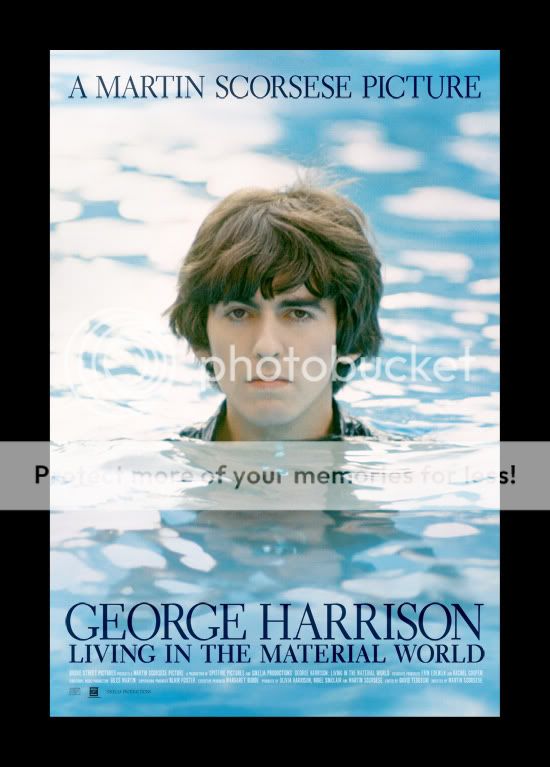 The documentary is called "George Harrison: Living in the Material World." I am too young to know anything about Beatlemania that I can't learn from documentaries, but you know what? The third most interesting Beatle is still plenty fascinating.
 --->>>